About Public Benefit: The Palo Alto POPOS Project
Public Spaces Hiding in Plain Sight
Palo Alto has 12 Privately Owned Public Open Spaces—or POPOS—created through agreements between the City of Palo Alto and private developers. These plazas, gardens, courtyards, pathways, and other open spaces were established for public use as part of the public benefit received in exchange for development flexibility.
But most people don't know they exist—or that they are welcome to use them.
How did privately owned spaces become public spaces?
From the 1950s through 2014, the City of Palo Alto had a zoning program called Planned Community, or PC Zoning. Between 1989 and 2013, Palo Alto's 12 POPOS were created through PC zoning, which allowed developers flexibility from existing zoning requirements in exchange for negotiated public benefits. In these 12 developments, one of those benefits was privately owned outdoor space set aside for public use.
The idea is not unique to Palo Alto. Privately Owned Public Spaces exist in cities across the U.S. and around the world, including San Francisco and New York City (where they are called POPS because not all are outdoors).
The bargain is straightforward: the property remains privately owned and maintained, but the Public receives something of value in return.
For that deal to work, however, the Public needs to know the benefit exists—and be able to use it. Today, Palo Alto has no consistent system of signage or public information identifying its 12 POPOS and communicating the Public's right to use them. Over time, awareness of the original commitments can fade—among the Public as well as property owners, managers, tenants, and even within the City itself—as people, ownership, and institutional memory change.
Where things stand now
Public Benefit is an ongoing public art and civic engagement project by Palo Alto-based artist Lisa Van Dusen investigating the gap between what was committed to on paper and what the Public experiences on the ground. The project explores what might be possible if these spaces became more visible, welcoming, used, and genuinely public.
What began as research and artwork for Van Dusen's 2025 MFA thesis has grown into exhibitions, public space interventions, walking tours, participatory artworks and public activations, a 2026 City of Palo Alto ArtLift Public Art Grant project, and ongoing engagement with the Public, property owners and tenants, City staff, and elected officials.
The work has moved beyond discovery and raising awareness. The current phase is working toward realizing the public benefit: closing the gap between past commitments, current conditions, and the potential of these spaces.
Priorities include:
Shared understanding of the specific commitments made for each POPOS, including the intended parameters for public access and use, as documented in the City ordinances, approvals, agreements, and other documents that established them.
Clear, welcoming identification and accessible public information so people can find the POPOS, understand why they exist, what they offer, and their right to use them—and have a way to ask questions or provide feedback.
Accountability and shared stewardship among the City, property owners and managers, tenants, and the Public to ensure these negotiated public benefits are maintained in both letter and spirit.
Active public use of the POPOS for gathering, rest, art, play, experimentation, conversation, chance encounters, and connection.
A durable framework for monitoring, maintaining, and supporting Palo Alto's POPOS into the future.
Through public participation, Public Benefit documents the POPOS as they are, explores what they could become, and works toward making those possibilities real.
If the Public doesn't exercise its power, it risks losing it.
Find the POPOS. Visit them. Notice what you find. Use them.
They are for your benefit.
About the Artist
Lisa Van Dusen is a Palo Alto-based interdisciplinary artist whose work uses mixed media, participation, humor, play, and civic engagement to explore public and personal life and possibility. Learn more about Lisa and her work.
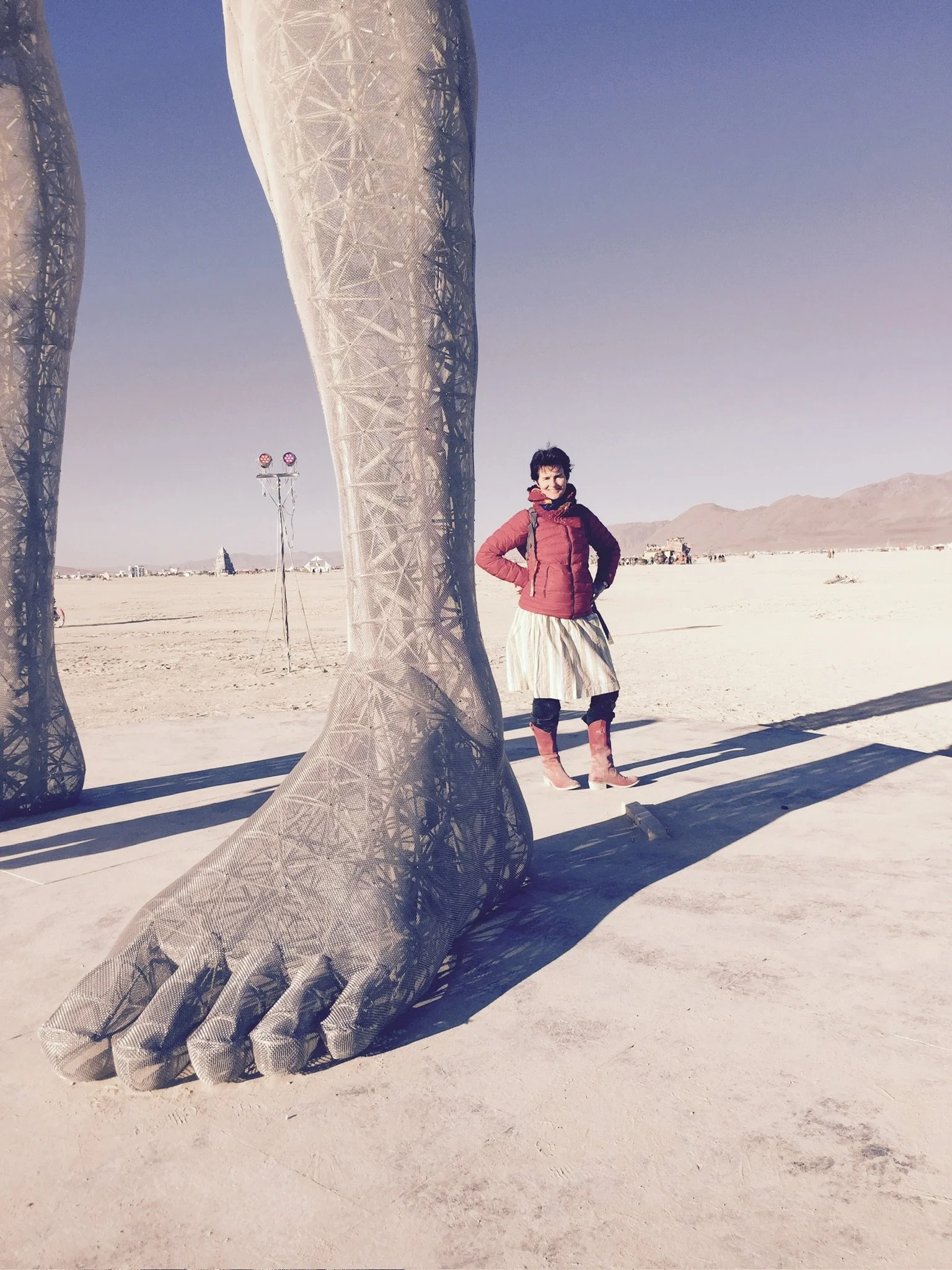
Sometimes you need to put your foot down.